
HV BMS · Master/Slave · 80–1000 VDC
HV BMS Master-Slave Architecture for High-Voltage Energy Storage
Master controllers and distributed slave modules for 80–1000 VDC high-voltage ESS. Centralized protection logic with cell-level voltage and temperature monitoring across 64–256 cells in series.
Quick Configurator
Match your high-voltage architecture – master, slave, or both – in seconds.
Architecture
Master + Slave
Voltage Range
80–1000 VDC
Communication
CAN / RS485
Cell Monitoring
64–256S
Situation
Your utility or C&I energy storage project needs battery management for a high-voltage DC bank – hundreds of cells in series, 80–1000 VDC bus voltage – where centralized control and distributed monitoring must work as one system.
The Challenge
High-voltage stacks fail fast when protection logic and cell monitoring are split across mismatched boards. Communication drops between master and slave modules, insulation faults go undetected, and one unmonitored cell becomes a thermal event – with hundreds of kWh at stake.
How do you deploy a high-voltage BMS with centralized master control and distributed slave monitoring for a 80–1000 VDC storage system?
Our Answer
SSLBATT HV BMS uses a master-slave architecture: a master controller (100 A–200 A) handles system logic, contactor control, and CAN/RS485 communication, while distributed slave modules monitor cell voltage and temperature locally across 64–256 cells in series. The platform is engineered for 80–1000 VDC bus voltages in containerized and industrial ESS deployments.
Master Controller
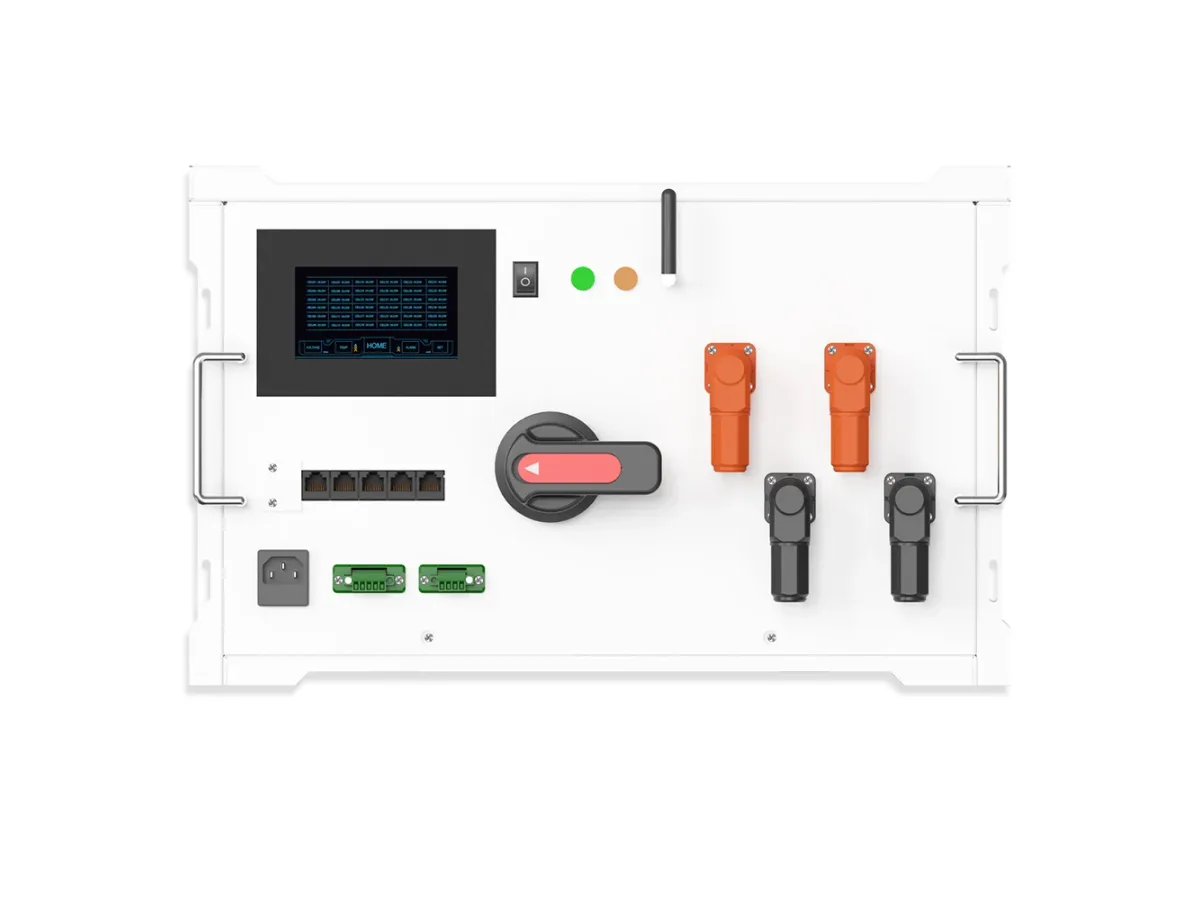
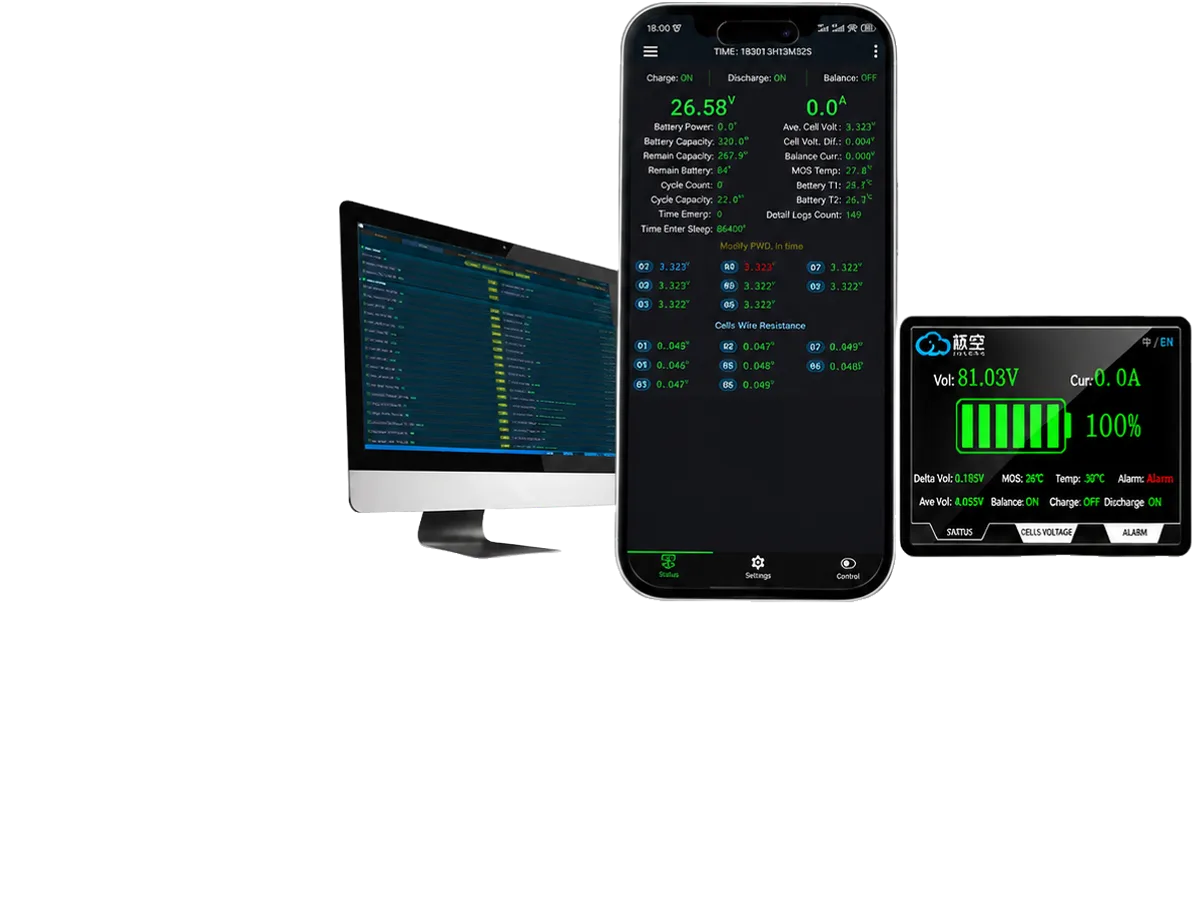
The master unit centralizes protection decisions, drives external contactors, and publishes CAN/RS485 telemetry to your PCS/EMS. Current ratings from 100 A to 200 A continuous.
Distributed Slave Modules
Slave modules sit at the cell pack and measure voltage and temperature locally, reporting to the master over a daisy-chain – scaling from compact stacks to multi-cabinet systems without redesign.
High-Voltage Protection
Overvoltage, undervoltage, overcurrent, short-circuit, and insulation monitoring across the full 80–1000 VDC range, with pre-charge control to protect downstream PCS equipment.
Series
Choose Your HV BMS Architecture
Master controllers and slave modules covering high-voltage storage programs.
SSLBATT HV BMS organizes high-voltage battery management by architecture role: masters define system behavior, slaves scale cell-level monitoring. Because the same platform is engineered for 80–1000 VDC stacks, the protection behavior you qualify is behavior proven across containerized and industrial storage programs.
HV Master BMS Controllers
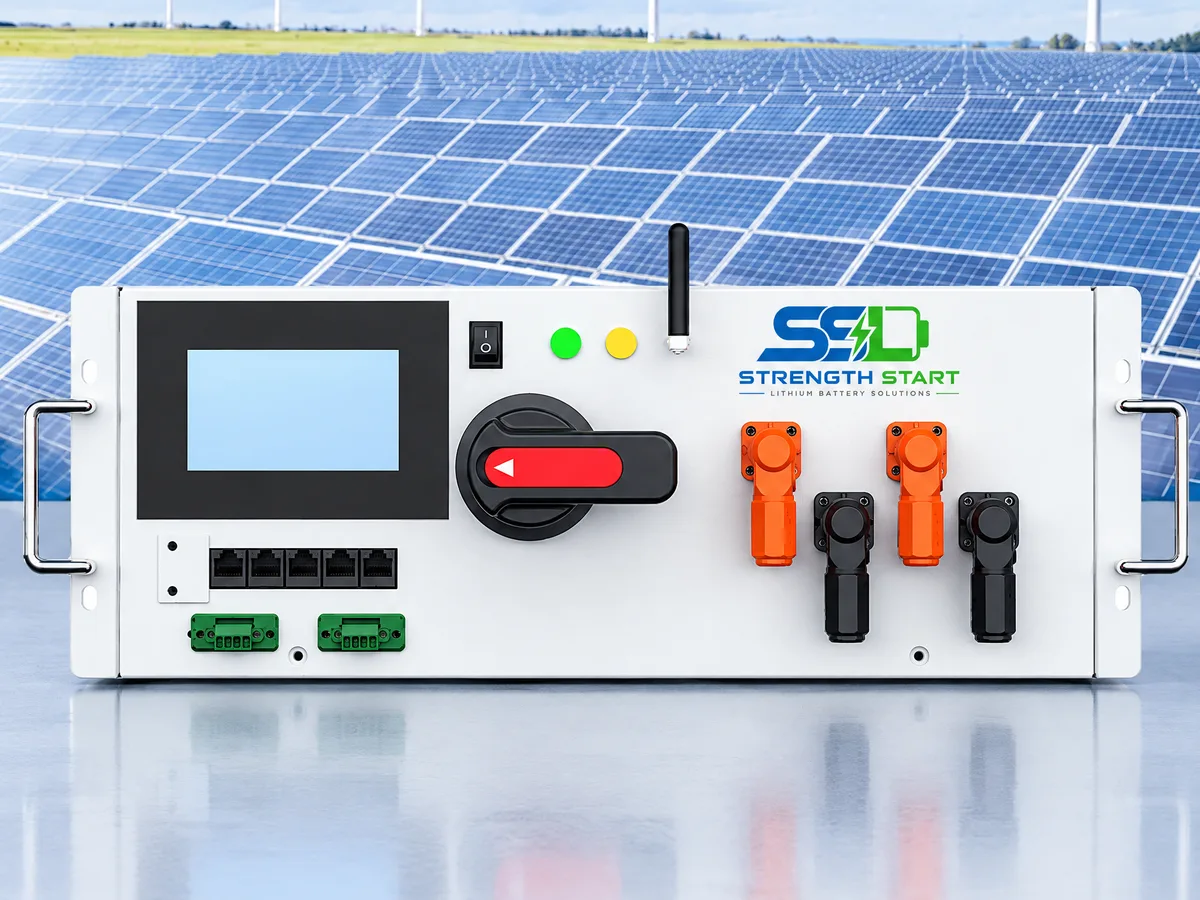
SSLBATT-HV-M200 (200 A) and M100 (100 A) with centralized protection, contactor drive, and CAN/RS485/Daisy telemetry for 80–1000 VDC PCS/EMS.
HV Slave BMS Modules
SSLBATT-HV-S16 (16S, 2 A active balance) and S24 (24S, bidirectional) per-cell monitors daisy-chained to the HV master.
Why SSLBATT HV BMS
Engineered for High-Voltage Reliability
Centralized control with distributed monitoring – the architecture behind utility-scale and industrial storage.
Single Responsible Platform
Master and slave boards are matched and tested as one system – no vendor-interface risk between a control box and third-party monitoring modules.
Full Voltage Range
Engineered for 80–1000 VDC bus voltages, compatible with 64–256 cells in series across LiFePO4 and other chemistries.
PCS/EMS Integration
CAN/RS485 protocol mapping pre-configured to your PCS or EMS model during technical review – not discovered during commissioning.
Pre-Charge Control
Integrated pre-charge circuit limits inrush current, protecting contactors and downstream PCS equipment on system start.
Comparison
HV BMS Architecture
Match master and slave roles to your high-voltage system topology.
View specifications
| Parameter | HV Master (M200 / M100) | HV Slave (S16 / S24) |
|---|---|---|
| Role | System logic & protection, contactor drive | Per-cell voltage & temperature acquisition |
| Voltage Range | 80–1000 VDC / up to 1000 VDC | 0–5 V per cell |
| Communication | CAN / RS485 / Daisy / RJ45 | isoSPI daisy-chain / CAN |
| Balancing | n/a (contactor drive) | 2A active / bidirectional <200mA |
| Current Rating | 200 A / 100 A continuous | Signal-level |
| Best Fit | Container/industrial ESS | Multi-cabinet systems |
| Voltage Accuracy | ±0.5% FS (M200) / ≤5 mV (M100) | ±2 mV @25 °C |
| Operating Temp | -20 ~ +65 °C | -25 ~ +85 °C (S16) / -40 ~ +65 °C (S24) |
| Protection Class | IP54 | On request |
| Dimensions | 482 × 550 × 265 mm (M200) / 482 × 398 × 175 mm (M100) | On request |
| Weight | ~18.5 kg (M200) | On request |
Where They Fit
Applications
High-voltage storage programs across utility and industrial deployment.
Containerized ESS
Utility-scale container storage with 80–1000 VDC stacks and centralized master control.
C&I Storage
Commercial and industrial systems with distributed slave monitoring across multiple cabinets.
Grid-Side Storage
Frequency regulation and renewable smoothing for grid-connected high-voltage systems.
Microgrid
High-voltage microgrid storage paired with PCS/EMS for islanded and grid-tied operation.
FAQ
Frequently Asked Questions
What voltage range does the HV BMS support?
What voltage range does the HV BMS support?
How do master and slave modules communicate?
How do master and slave modules communicate?
Can the HV BMS scale to multi-cabinet systems?
Can the HV BMS scale to multi-cabinet systems?
What certifications does the HV BMS carry?
What certifications does the HV BMS carry?
Internal Links
Related Products & Solutions
Complete your high-voltage program with the cells and systems our BMS manages.
BMS
Standard Balance BMS
Low-voltage 12V/24V BMS with 1–2 A active balancing for RV, marine, and off-grid packs.
Cells
LiFePO4 Prismatic Cells
Grade A prismatic cells from 200 Ah to 628 Ah for high-voltage pack assembly.
Systems
Energy Storage Systems
Complete air-cooled and liquid-cooled systems with integrated BMS architecture.
Real Photos
Factory & Product Gallery
Request Quote
Request an HV BMS Fit Check
Share your system voltage, cell count, and PCS/EMS model for a 24-hour engineering fit check and B2B quote.
Explore Products
Related BMS & Battery Systems
Browse our full range of BMS modules, battery packs, and ESS configurations.
Product
HV Master BMS Controller
Centralized master controller for high-voltage ESS.
Product
JK BMS 2A+ Active Balancer
Active cell balancing BMS for DIY and custom packs.
Product
Air-Cooled 100 kWh ESS
Pre-integrated commercial storage system with BMS.